25 Top Pre-Seed & Seed Investors for Founders to Research in 2026
Table of Contents

A LinkedIn Post Worth Studying
Last week, Kevin Siskar, CEO and co-founder of Finta, shared a LinkedIn post that took off with founders: 25 investors from Finta's pre-seed and seed guides, each with a named partner or investment leader to research. It is one of the more useful fundraising posts I have seen this year, and it deserves a proper breakdown rather than a quick scroll.
Full credit to Kevin and the Finta team for compiling it. Finta is a fundraising platform that helps founders manage their raise, from investor CRM and deal rooms to securely sharing pitch decks, so lists like this are very much in their wheelhouse. You can read the original post here.
The 25 Pre-Seed and Seed Investors
Here is the list as Kevin shared it, with the partner or investment leader at each fund:
What This Pre-Seed and Seed Investor List Gets Right
Most "top investor" lists name funds and stop there. This one names a person at each fund, and that is the part founders should copy. Venture capital is a partner-level business. The firm on your cap table matters less than the individual who champions your deal through a Monday partner meeting. When you research a fund, your real job is to find the one partner whose thesis, portfolio and stage match your startup, then reach that person specifically.
The list also spans the full pre-seed and seed spectrum. Accelerators like Y Combinator and Techstars, operator-led funds like Hustle Fund and Weekend Fund, and institutional seed funds like First Round Capital and Floodgate all behave differently. They write different cheque sizes, move at different speeds and want different levels of traction. Treating them as one category is a common first-time founder mistake.
My Take: A Startup Investor List Without a Thesis Is Just a List
Here is where I will add my own view, because a list alone does not get you a term sheet.
1. Qualify before you contact. Kevin's own closing advice is the most important line in the post: check stage, sector, geography, cheque size and portfolio conflicts before reaching out. If a fund already backs your direct competitor, you are a conflict, not a prospect. If they lead $3M seed rounds and you are raising $400K, you are too early for them.
2. Find the warm path. Every fund on this list is flooded with cold decks. A credible introduction from a portfolio founder, an accelerator or a mutual contact moves you from the pile to the calendar. My guide on using a VC directory for investor outreach walks through how to build that path systematically.
3. Match your deck to the stage. Pre-seed investors bet on team and insight; seed investors want early evidence. My complete guide to winning pitch decks in 2026 and my guide to pitching a venture capital firm cover what each stage expects to see.
One Gap Worth Noting About Startup Investors: Geography
The 25 funds are heavily US-centric, which reflects where Finta's founder base raises. If you are building in Africa, Asia or other emerging markets, most of these funds will not lead your round, although several, including Y Combinator, Techstars, Antler and Soma Capital, do back international founders.
For founders outside the US, I maintain a venture capital directory organized by region, covering active funds in Nigeria, Kenya, South Africa, Ghana, Egypt, Rwanda, Singapore, China, India, Japan, Europe, Canada and the United States, plus a full searchable VC firm list. The same qualification rules apply everywhere: stage, sector, geography, cheque size, conflicts, then the introduction path.
How to Turn This Venture Capital List Into Meetings
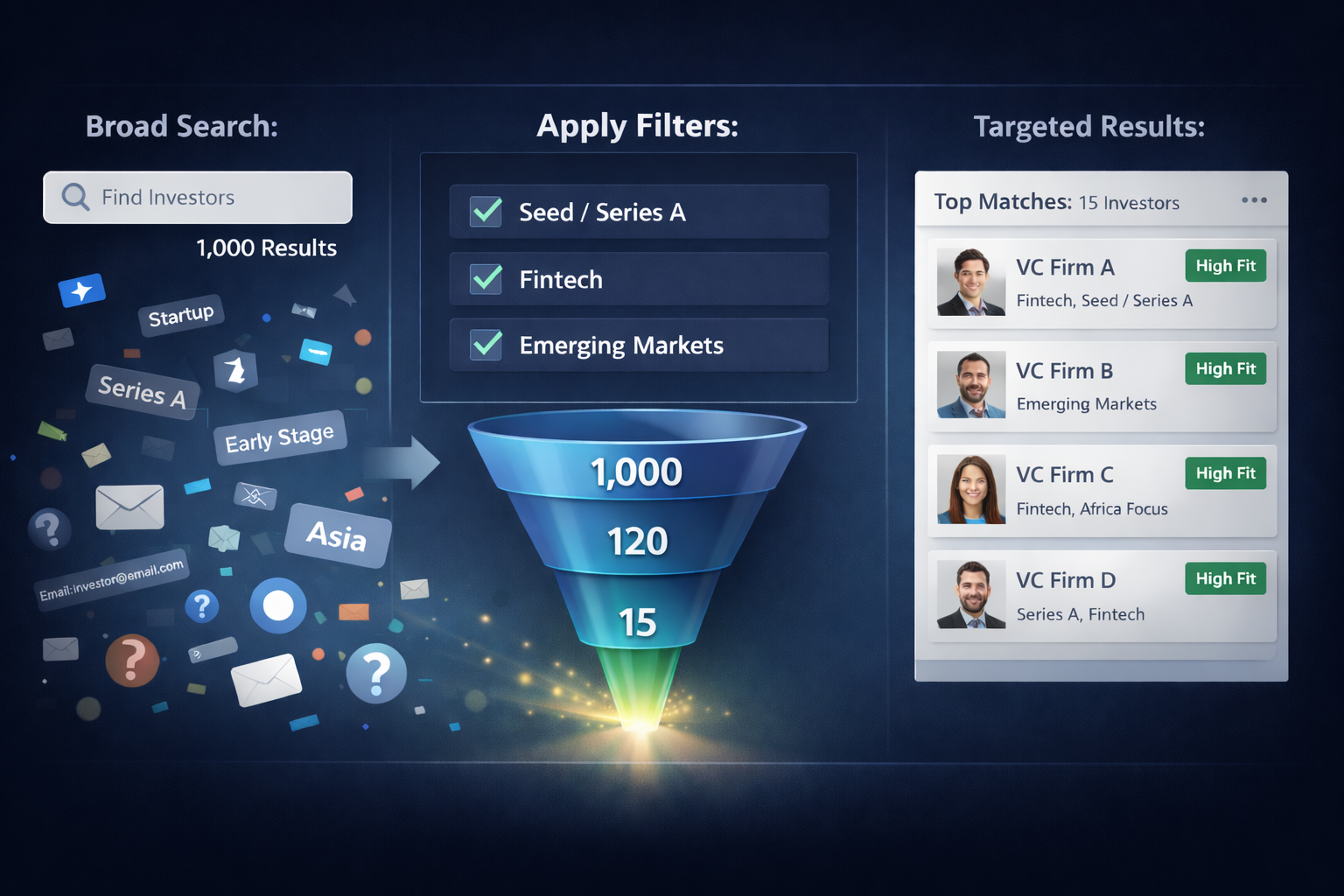
1. Shortlist five to eight funds whose stage and sector genuinely match your round, not all 25.
2. Research the named partner, read their recent writing and portfolio announcements, and find a specific reason your startup fits their thesis.
3. Secure one warm introduction per fund before you send anything cold.
4. Send a short email, two paragraphs, your key metric, your round size and a link to your deck.
5. Follow up once after a week with a progress update, not a reminder.
If your deck is not ready for this level of scrutiny, see my pitch deck services before you start outreach. You only get one first impression with investors like these.
Frequently Asked Questions About Pre-Seed and Seed Investors
1. What is the difference between a pre-seed and a seed investor?
Pre-seed investors back founders at the idea or early product stage, usually with cheques from $50K to $500K, and bet primarily on the team and the insight. Seed investors expect early traction, such as users, revenue or a working product, and typically write cheques from $500K to $3M.
2. How do I know which partner at a VC firm to contact?
Look for the partner whose portfolio and published thesis match your sector and stage. Most firms list partner bios and investments on their websites, and partners often write about what they want to fund. Contacting the wrong partner is one of the most common reasons decks go unanswered.
3. Do these 25 investors fund startups outside the United States?
Some do. Y Combinator, Techstars, Antler and Soma Capital regularly back international founders, but most funds on the list focus on the US. Founders in Africa and Asia should also research regional funds, which you can find in my venture capital directory.
4. How many investors should I contact when raising a seed round?
Quality beats volume. A focused list of 20 to 40 well-qualified funds, approached through warm introductions, outperforms hundreds of cold emails. Start with five to eight, learn from the feedback, then expand.
5. Where can I find more pre-seed and seed investors?
Kevin's post draws from Finta's pre-seed and seed guides, which are worth reading in full. You can also browse my venture capital directory and full VC firm list, or read more fundraising guides on the blog.
Final Thoughts
Kevin Siskar's post is a strong starting point because it does the two things founders rarely do: it names the person, not just the fund, and it reminds you to qualify before you contact. Do the research, find the warm path, and bring a deck that survives partner-meeting scrutiny. Know who, know how, then execute.