How to Use a VC Directory to Build a Targeted Investor Outreach Strategy
Table of Contents
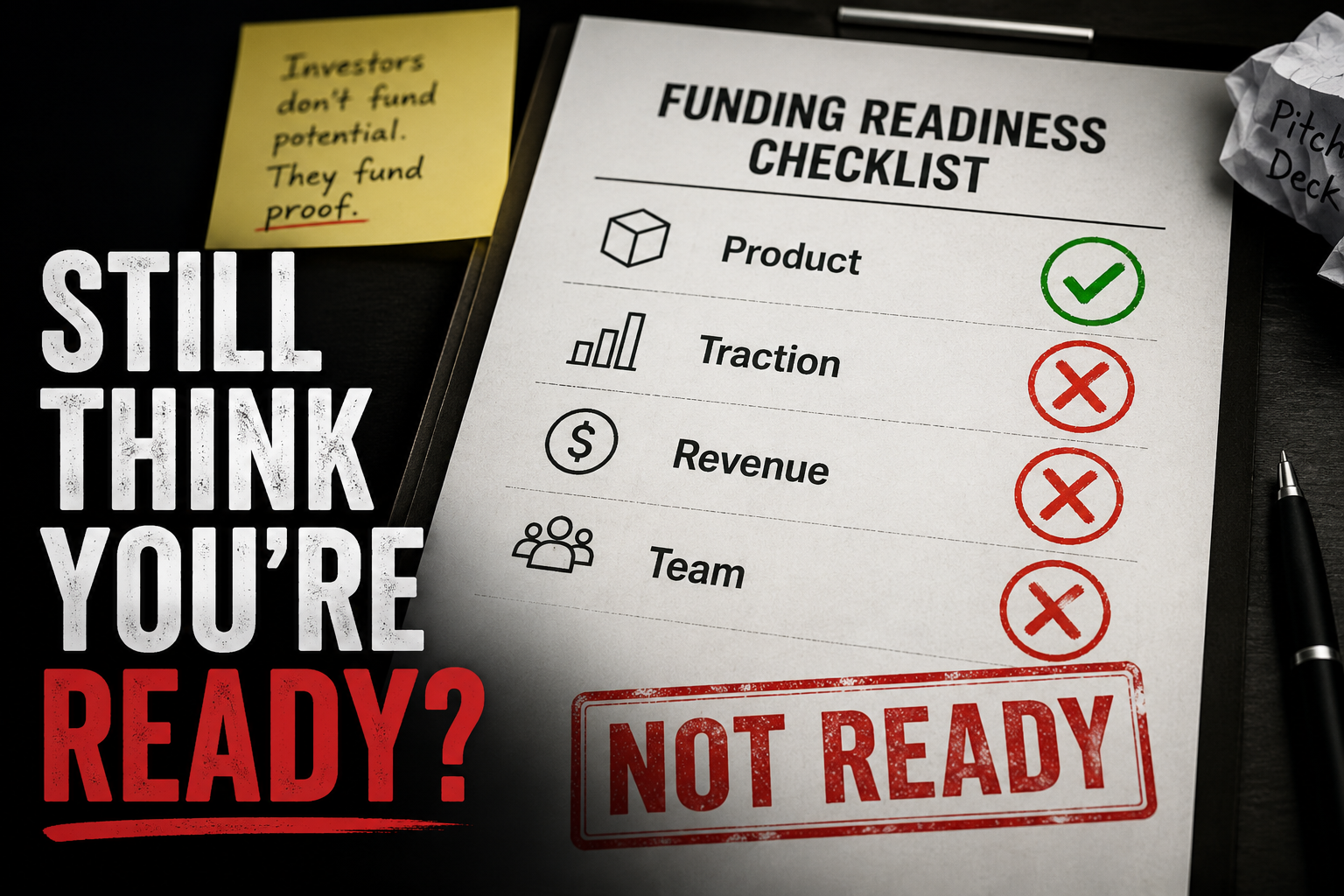
Introduction: Why Spray-and-Pray Investor Outreach Fails
Every founder who has tried to raise venture capital knows the temptation: compile the biggest possible list of investors, blast out hundreds of emails, and hope that a few respond. It feels productive. It feels like progress. But the data tells a different story.
The average response rate to cold investor outreach is somewhere between 1% and 3%. That means for every 100 emails you send, you might hear back from one or two investors — and most of those responses will be polite rejections. The problem isn't your startup. The problem is your targeting.
Venture capital firms are not interchangeable. Each firm has a specific investment thesis, stage preference, sector focus, and geographic footprint. Sending a pre-seed fintech pitch to a growth-stage healthcare fund isn't just a waste of time — it signals to the investor that you haven't done your homework. And in a world where investors evaluate founders as much as they evaluate businesses, that first impression matters.
The good news? Building a targeted outreach strategy doesn't require insider connections or expensive databases. It starts with a well-organized VC directory and a systematic approach to research and prioritization.
What a VC Directory Actually Tells You
A quality VC directory is more than a list of firm names and website links. It's a structured database that reveals the investment patterns and preferences of each firm. Here's what to look for:
Investment Stage. This is the single most important filter. A firm that focuses on Series B and later rounds isn't going to write a $500K pre-seed check, no matter how compelling your pitch is. Most directories categorize firms by stage: pre-seed, seed, Series A, Series B, growth, and late stage. Start here.
Sector Focus. Many VC firms specialize in specific industries — SaaS, fintech, healthtech, climate tech, AI, consumer, or deep tech. Some are generalists, but even generalist firms tend to have partners who focus on particular sectors. A directory that includes sector tags lets you immediately narrow your list to firms that invest in your space.
Geographic Preference. Some firms invest globally. Others are hyper-local, preferring to back startups in their own city or region. Geography matters more than most founders realize, especially at the pre-seed and seed stages where investors often want to be close to their portfolio companies. Our VC directory organizes firms by region — from Nigeria and Kenya to California and the United Kingdom — making geographic filtering straightforward.
Deal Size and Check Size. Understanding a firm's typical check size helps you avoid mismatches. If you're raising a $1M seed round, a firm that writes $10M+ checks probably isn't the right fit. Conversely, a micro-fund with a $100K average check might not be able to lead your round.
Portfolio Companies. This is often the most revealing data point. A firm's existing portfolio tells you exactly what kind of companies they back. If they've already invested in a direct competitor, they're unlikely to fund you. But if they've invested in adjacent companies in your space, they clearly understand your market.
Step 1: Define Your Investor Profile
Before you open a single directory page, answer these four questions:
1. What stage are you raising at? Pre-seed, seed, Series A, or later? This eliminates the majority of firms immediately.
2. What sector are you in? Be specific. "Tech" isn't a sector. "B2B SaaS for supply chain management" is.
3. Where are you based, and does it matter? Some founders are flexible on investor geography. Others need local investors for regulatory, cultural, or timezone reasons.
4. How much are you raising, and what check size do you need? This determines whether you're looking at micro-funds, institutional seed funds, or multi-stage firms.
Write these criteria down. They become your filter set when you start searching through a VC directory or searchable VC list.
For example, if you're a seed-stage fintech startup based in Lagos raising $2M, your investor profile might look like this:
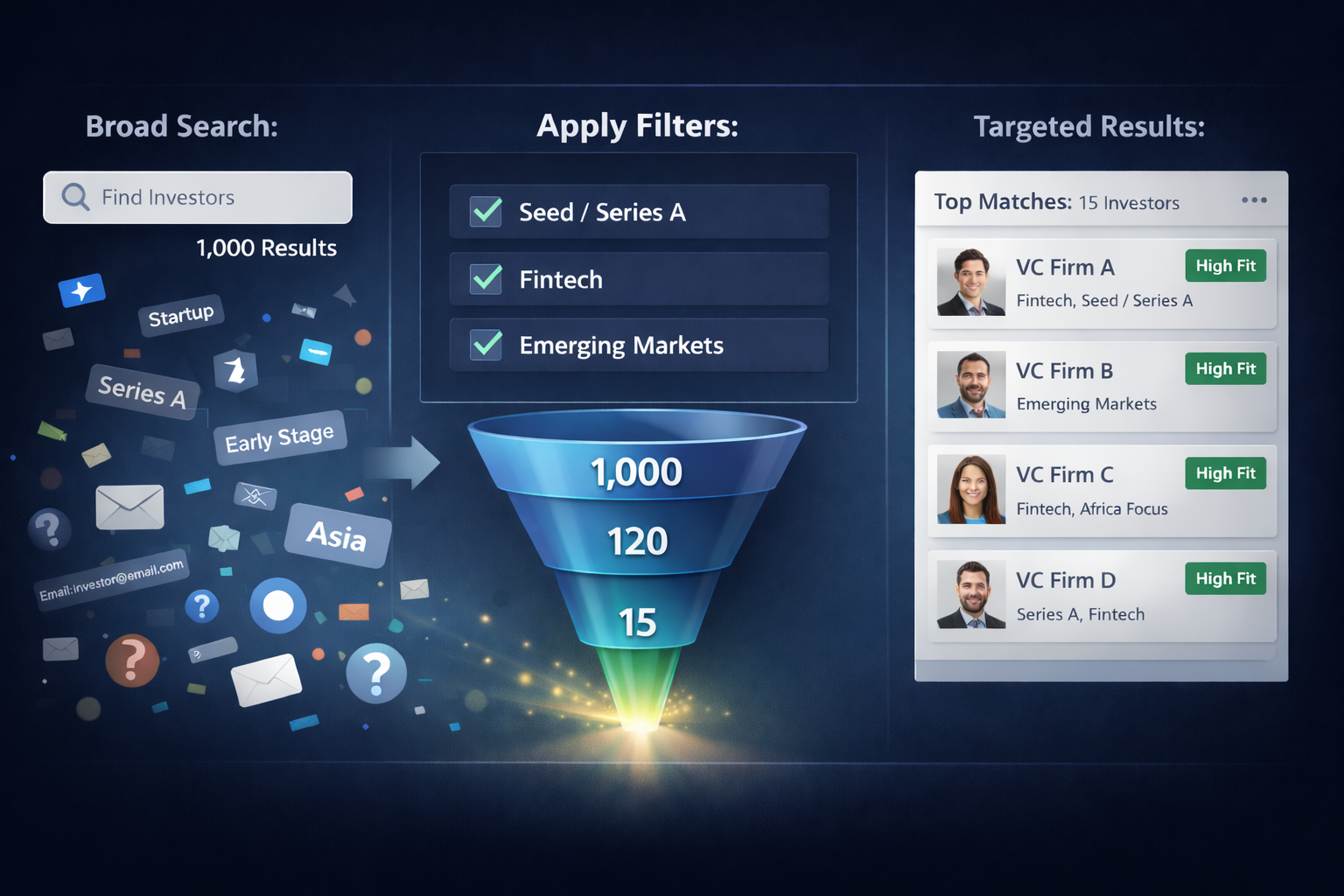
With this profile in hand, you can immediately filter down to a manageable list of 20–40 highly relevant firms instead of casting a net across 500 generic names.
Step 2: Build a Tiered Target List
Not every firm on your filtered list is equally likely to invest. Create three tiers:
Tier 1: Perfect Fit (10–15 firms). These firms match every criterion on your investor profile. They invest at your stage, in your sector, in your geography, and at your check size. They may even have portfolio companies in adjacent spaces. These are your priority targets — the firms where you'll invest the most time in research and personalization.
Tier 2: Strong Fit (10–15 firms). These firms match most of your criteria but have one gap. Maybe they're a generalist fund that has occasionally invested in your sector, or they typically invest at the next stage up but have been known to write earlier checks. Worth pursuing, but with adjusted expectations.
Tier 3: Stretch (5–10 firms). These firms are on the edges of your criteria. Maybe they're a global fund that hasn't invested in your region yet but has expressed interest, or a sector-focused firm that typically invests at a later stage. Low probability, but if one bites, it could be a strong partner.
Use the VC list to search and sort firms by these criteria. The ability to filter by investment stage, sector, and geography in a single interface saves hours of manual research.
Step 3: Research Before You Reach Out
This is where most founders skip ahead — and where most outreach campaigns fail. Before you send a single email, spend 15–20 minutes researching each Tier 1 firm. Here's what to look for:
Recent investments. What has the firm invested in during the last 6–12 months? This tells you whether they're actively deploying capital and what themes they're currently excited about. If they just led a round in a company similar to yours, that's a strong signal.
Partner specialization. Most VC firms have multiple partners, each with their own area of focus. Don't email the firm's general inbox or the managing partner if there's a specific partner who covers your sector. Check the firm's website, LinkedIn profiles, and recent speaking engagements to identify the right person.
Portfolio overlap and conflicts. If a firm already has a direct competitor in their portfolio, they almost certainly won't invest in you. But if they have complementary companies — not competitors — that's actually a positive signal. It means they understand your market and might see strategic value in adding you to their portfolio.
Investment thesis and blog posts. Many VCs publish their investment thesis, write blog posts about sectors they're interested in, or share perspectives on social media. Reading these gives you language and framing to use in your outreach. If a partner recently wrote about the future of embedded finance and your startup is building embedded payment infrastructure, reference that post in your email.
Step 4: Tailor Your Pitch Materials
Here's a truth that's uncomfortable for founders who want to move fast: a single pitch deck does not work for every investor.
The core narrative of your deck — the problem, solution, market, and team — stays consistent. But the emphasis, framing, and supporting data should shift based on who you're pitching.
For a sector-specialist fund, you can go deeper on market dynamics and competitive positioning because they already understand the space. For a generalist fund, you need to spend more time on market education and why this sector matters.
For a firm that invests at your exact stage, focus on traction metrics that matter at that stage (for seed, that might be early revenue, pilot customers, or waitlist growth). For a firm that typically invests later but might make an exception, you need to demonstrate why you're further ahead than a typical company at your stage.
This is where working with a professional pitch deck writing service can make a significant difference. Experienced pitch deck writers understand how to adapt a core narrative for different investor audiences without losing coherence. They can help you create a base deck plus tailored variations for your Tier 1 targets — ensuring that each version speaks directly to that investor's thesis and preferences.
If you're a first-time founder or raising your first institutional round, having a professionally crafted deck that's been optimized for investor readability can be the difference between getting a meeting and getting ignored.
Step 5: Execute a Sequenced Outreach Campaign
With your tiered list, research notes, and tailored materials ready, it's time to reach out. But don't blast everyone at once. Sequence your outreach strategically:
Start with Tier 2 and Tier 3. This might sound counterintuitive, but there's a reason for it. Your first few pitches are practice rounds. You'll refine your messaging, learn what questions investors ask, and identify weak spots in your narrative. You don't want to burn your best prospects while you're still warming up.
Move to Tier 1 after 5–10 conversations. By this point, you've sharpened your pitch based on real investor feedback. You know which slides generate the most questions, which objections come up repeatedly, and how to handle them. Now you're ready for your priority targets.
Warm introductions beat cold emails — but cold outreach works when done right. The ideal path to any investor is through a warm introduction from a founder in their portfolio, a mutual connection, or another investor. But if you don't have a warm path, a well-researched cold email that references specific details about the firm's thesis, recent investments, or a partner's published perspectives can still open doors. Generic templates do not.
Follow up deliberately. If you don't hear back after your first email, follow up once after 5–7 business days. Reference something new — a recent milestone, a relevant market development, or an additional data point. If you still don't hear back, move on. Two follow-ups is the maximum; anything more risks damaging the relationship.
Common Mistakes Founders Make with VC Directories
Even with a solid directory and a clear process, founders frequently stumble on these pitfalls:
Targeting too broadly. "We sent our deck to 300 investors" sounds impressive but usually means you sent a generic pitch to 300 people who don't invest in your stage, sector, or geography. Quality over quantity, every time.
Ignoring stage mismatch. This is the most common and most costly mistake. If a firm's website says "Series A and beyond," they mean it. Sending them a pre-seed pitch wastes both your time and theirs.
Skipping portfolio research. Not checking a firm's existing portfolio before reaching out is a missed opportunity at best and embarrassing at worst. If they already have a competitor, your outreach signals that you haven't done basic due diligence.
Using the same deck for everyone. As discussed above, one-size-fits-all decks underperform tailored versions. At minimum, adjust your deck's emphasis based on whether you're pitching a sector specialist or a generalist.
Not tracking your outreach. Use a simple spreadsheet or CRM to track which firms you've contacted, when, who responded, and what stage the conversation is at. This prevents duplicate outreach and helps you manage follow-ups.
Putting It All Together
Building a targeted investor outreach strategy isn't complicated, but it does require discipline. The process is straightforward:
1. Define your investor profile based on stage, sector, geography, and check size
2. Use a VC directory to filter firms that match your criteria
3. Build a tiered target list using a searchable VC database
4. Research each target firm before reaching out
5. Tailor your pitch deck for different investor types
6. Sequence your outreach starting with lower-priority targets for practice
7. Track everything and follow up deliberately
The founders who raise capital efficiently aren't the ones who send the most emails. They're the ones who send the right emails to the right investors with the right materials. A well-used VC directory is the foundation of that strategy.
Ready to start building your targeted investor list? Explore our VC Directory to browse firms by region and sector, or search our VC List to filter by investment stage and focus. And if you need help crafting a pitch deck that's tailored for the investors on your list, learn more about our pitch deck writing services.
---
Catherine Oyiliagu (ECO) is a writer and funding strategist focused on startup funding ecosystems, with a particular interest in how venture capital, debt financing, and grants shape growth-stage companies in Africa and emerging markets. She helps founders decode funding signals and build stronger capital readiness narratives.