Which VC Firms in China Are Considered the Best? An Opinion Guide for 2026
Table of Contents
An Opinion Piece, Not a Ranking
Disclaimer: this article is my personal opinion. There is no official league table of the "best" VC firms in China, and nothing here is investment, legal or financial advice. I base my view on publicly reported deals, how often a firm leads rounds, its track record of exits, and how useful it is likely to be for a founder. Your "best" investor is the one that fits your stage, sector and geography. If you want the raw list first, start with my directory of top venture capital firms in China.
Quick Answer: The Best VC Firms in China (My Picks)
If you are short on time, these are the Chinese venture capital firms I consider the strongest in 2026:
Stages, deal sizes and addresses for each firm are listed on the China VC directory page.
The China Venture Capital Scene in 2026
After several slow years, Chinese venture capital is recovering. KPMG's Venture Pulse report found that VC investment in China reached $35.1 billion in Q2 2026, helping Asia record its strongest quarter since late 2021. The recovery is concentrated in a few themes:
One important trend: government-backed funds and corporate investors now play a much larger role in big financings. Many large rounds include state-linked guidance funds or strategic investors such as Alibaba and Tencent alongside traditional VCs. For founders, that means money often comes with strategic and policy considerations as well as capital.
Recent Headline Funding Rounds Involving Top Chinese VCs
These recent deals show which firms are actually leading rounds in 2026:
The pattern is clear: HSG, IDG and Hillhouse keep appearing at the top of the biggest Chinese deals. That is a large part of why I rank them highly. For weekly updates on deals like these, see my startup funding news page.
What Makes a Chinese VC Firm "the Best"? My Criteria
When I judge the best venture capital firms in China, I look at:
Firm-by-Firm: My View of the Top Chinese VCs
HSG (formerly Sequoia China)
HSG became independent from Sequoia Capital and rebranded, but it kept its reputation as China's most influential VC. It manages tens of billions of dollars across seed, venture and growth funds, and it invests in technology, healthcare and consumer companies. It is headquartered in Hong Kong. Best for: ambitious AI, healthcare and consumer startups that want a brand-name lead investor.
IDG Capital
Founded in 1993, IDG Capital pioneered institutional venture investing in China and has backed hundreds of exits. In 2026 it has led some of the largest AI and robotics rounds in the country. Best for: Series A to growth-stage tech companies, especially AI, robotics and hardware.
Hillhouse
Hillhouse is one of Asia's largest alternative asset managers. It invests with a long time horizon across venture, growth and private equity. Best for: later-stage companies with proven revenue. It is rarely the right first call for a pre-seed founder.
Qiming Venture Partners
Qiming has offices in Shanghai, Beijing, Hong Kong and several US cities, and it is particularly strong in healthcare and biotech. Best for: healthtech, medtech and life-science startups, including those with a US connection.
Matrix Partners China
A leading early-stage and early-growth investor focused on new economy, deep technology and healthcare. Best for: founders raising a seed or Series A round in China.
ZhenFund
ZhenFund is consistently one of the most active seed investors in China. Best for: very early-stage founders with a strong team and little traction.
Sinovation Ventures
Founded by Dr. Kai-Fu Lee, Sinovation focuses on AI, robotics and education technology across China and the US. Best for: AI-first startups at early stage.
Lightspeed China Partners, GGV Capital and DCM
These firms have strong cross-border DNA, with teams or history spanning China and the US. Best for: founders who want a China-savvy investor that also understands Western markets.
Can Startups From Africa, the West or Other Asian Countries Pitch Chinese VCs?
This is one of the most common questions I hear. The short answer: yes, it is possible, but it is not the default path. Most Chinese VC firms invest mainly in companies building in or for the Chinese market. Here is how I see it by region:
Startups in Africa
Chinese capital is present in Africa, but mostly through tech giants and corporate investors rather than traditional Chinese VCs writing cheques directly. Fintech, e-commerce and mobile platforms that use Chinese technology or supply chains have the strongest case. If you are an African founder, my honest advice is to lead with Africa-focused VCs first. See my lists of VC firms in Nigeria, Kenya, South Africa and Egypt, then add Chinese investors with a clear China angle.
Startups in the United States and Europe
Geopolitics matters here. The US has introduced rules restricting certain outbound investment into Chinese AI, semiconductor and quantum companies, and US and European governments review some inbound Chinese investment on national-security grounds. Sensitive sectors such as AI, chips, defence and data-heavy products may face extra scrutiny. Get legal advice before accepting Chinese capital if you operate in these areas. Consumer, healthcare and climate companies usually face fewer barriers.
Startups in Southeast Asia, India and the rest of Asia
Southeast Asia is where Chinese VCs are most active abroad. Several Chinese firms have offices or portfolios in Singapore and the wider region. India is harder, because India requires government approval for investment from countries that share a land border with it. For Asian founders, it is worth comparing Chinese firms with VC firms in Singapore, Japan and India.
How to Approach a Chinese Venture Capital Firm
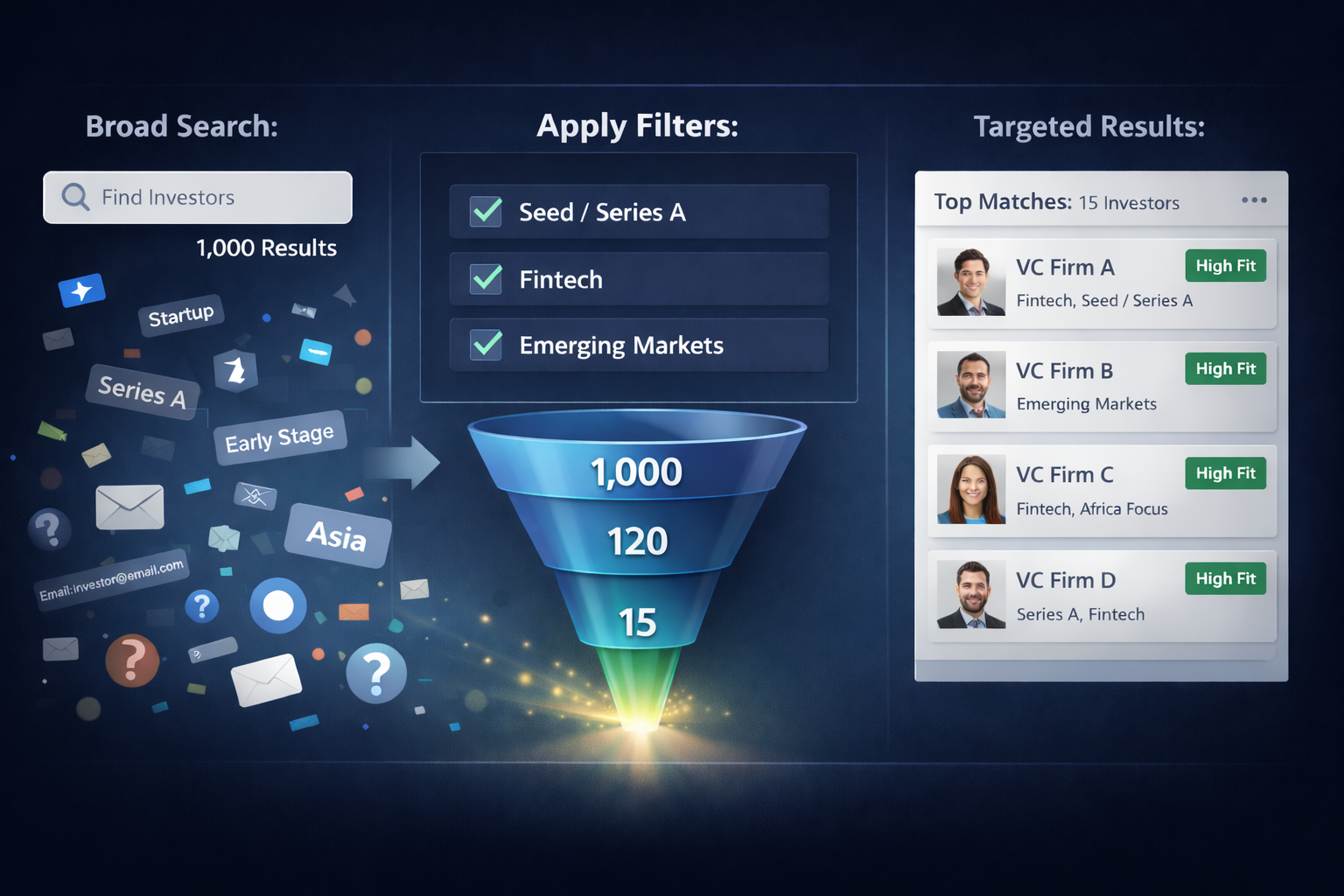
For a step-by-step method for shortlisting investors, read how to use a VC directory to build a targeted investor outreach strategy.
Frequently Asked Questions About the Best VC Firms in China
1. Which is the best VC firm in China?
In my opinion, HSG (formerly Sequoia China) is the most influential, with IDG Capital and Hillhouse close behind. The best firm for you depends on your stage and sector.
2. What is the biggest venture capital firm in China?
By assets under management, Hillhouse and HSG are among the largest. Hillhouse manages well over $100 billion across strategies, and HSG manages tens of billions.
3. Is Sequoia China still called Sequoia?
No. Sequoia China separated from Sequoia Capital and now operates as HSG. Its Chinese name, HongShan, is still used in some places.
4. Can foreign startups get funding from Chinese VCs?
Yes, but most Chinese VCs focus on China. Foreign founders have the best chance when they have a China market or supply-chain angle, and when they approach Hong Kong or Singapore teams.
5. Do Chinese VCs invest in African startups?
Some do, mostly through corporate investors and strategic partnerships. Africa-focused VCs remain the more common first source of funding for African founders.
6. Which Chinese VCs invest at seed stage?
ZhenFund, Matrix Partners China, Sinovation Ventures, Lightspeed China Partners and HSG's seed funds are known for early-stage investing.
7. Which sectors are Chinese VCs investing in right now?
In 2026, the most active areas are AI, robotics and embodied AI, semiconductors, AI drug discovery, advanced manufacturing and clean energy.
8. Are there risks to accepting Chinese venture capital?
Possibly. Depending on your country and sector, there may be regulatory review, restrictions on future investors or government contracts, and currency-control issues. Speak to a lawyer before signing.
9. Where can I find a list of VC firms in China?
My China VC directory lists top firms with websites, addresses, stages and typical deal sizes. You can also browse the full venture capital directory.
Final Thoughts
In my view, HSG, IDG Capital and Hillhouse are the best-known and most active VC firms in China in 2026, with Qiming, Matrix, ZhenFund and Sinovation standing out for specific sectors and stages. But "best" is personal. The right Chinese investor is the one that understands your market and can help you grow.
If you are preparing to raise, I can help you shape a pitch that works for Chinese and international investors through my pitch deck design services. For more guides on funding, visit the YWN Ventures blog.
Sources: KPMG Venture Pulse Asia Q2'26; Reuters and South China Morning Post reporting on Anew Labs (September 2026); reporting on XPeng Robotics' financing (August 2026). Figures are as reported and may change.