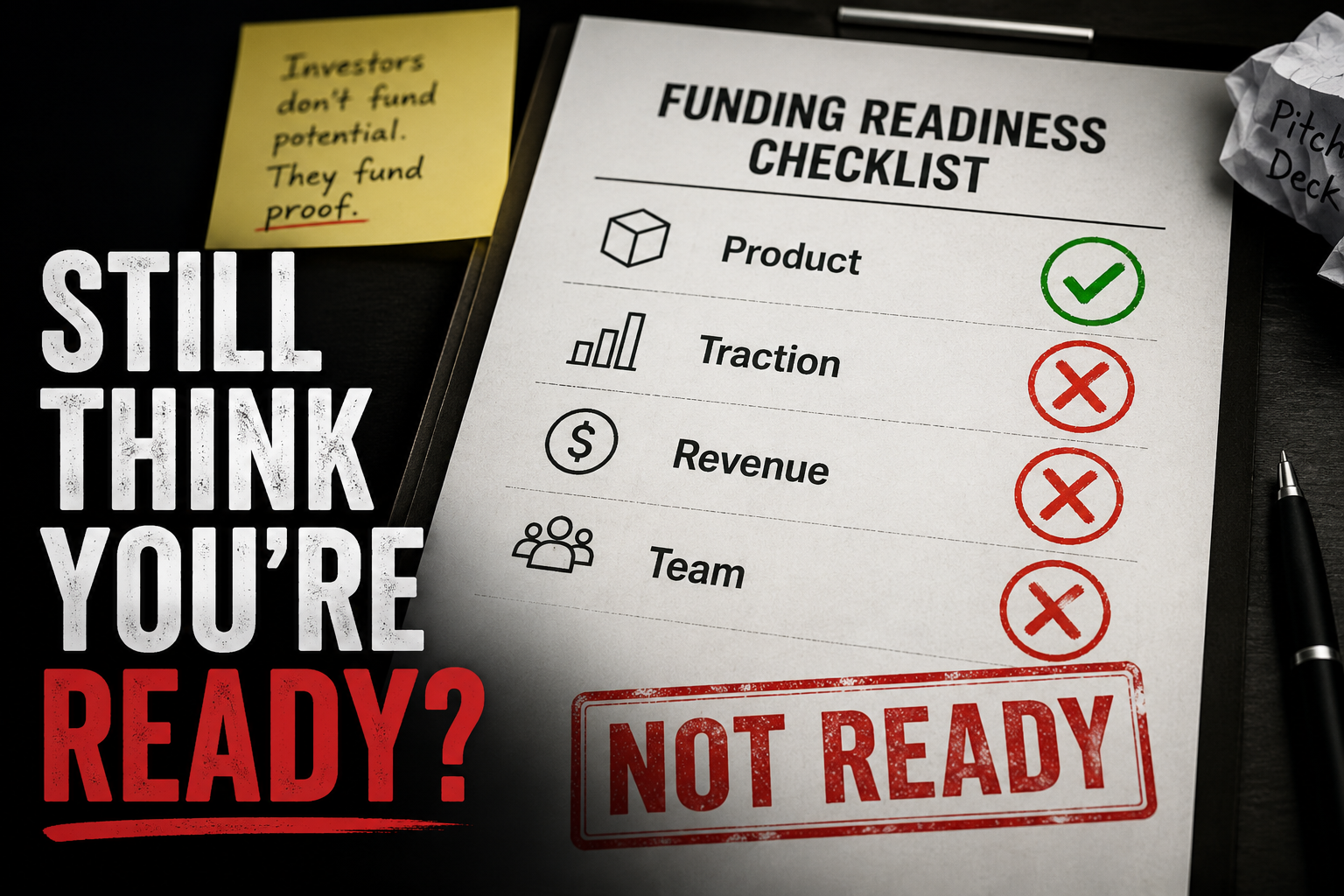
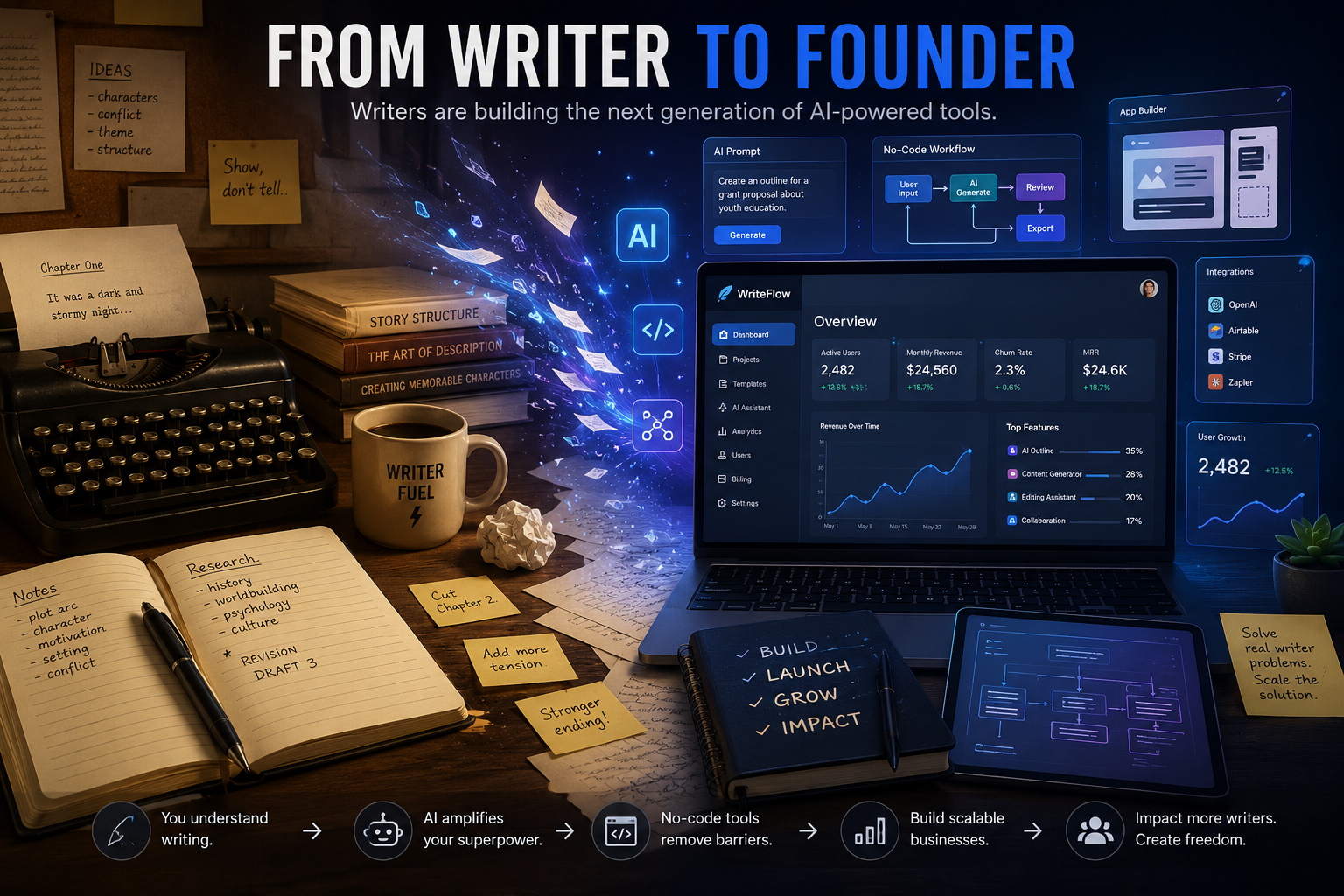
Venture Capital Funding Tips for Writers: How to Build a Fundable Startup in the AI Era
Table of Contents
A Reality Check Before the Hope: What VCs Will Not Fund
Let's start with the part most blog posts skip, because flattery sells better than honesty. Venture capitalists are not typically interested in funding novels, freelance writing businesses, blogs, newsletters, or traditional publishing ventures. If that's the round you're trying to raise, the silence from investors isn't personal. It's structural.
Here is why, in plain language:
So when a writer pitches "I'm building a content business and want VC funding," investors aren't being snobs by passing. They're doing their job, which is deploying capital into things that can return their fund.
This is the part where most founder advice ends. It shouldn't, because the real story for writers in 2026 is genuinely exciting.
The Shift: AI and No-Code Have Rewritten the Economics of Building Software
For most of the last twenty years, the moat between "person with an idea" and "person who ships software" was a team of engineers, a server bill, and 18 months. That moat has quietly collapsed.
What changed:
The piece almost nobody says out loud: writers already have most of the adjacent skills product teams pay a fortune to hire. Language structure, user empathy, persuasion, information architecture, workflow understanding, narrative, and the patience to revise something until it actually communicates. Those are not soft skills. They are the skills that decide whether software is used or abandoned.
Engineers can build almost anything. They often cannot, on their own, decide what to build, how to explain it, or why a human would care. Writers can.
The New Opportunity: Where Writers Can Actually Build Fundable Startups
If you accept that VCs fund scalable software, not scalable typing, the question becomes: what software should a writer build? Here are the categories with the cleanest founder–market fit for writers.
Creative Writing SaaS
The creative writing world is full of stubborn, expensive, daily pain points that no engineer feels in their bones. Examples worth exploring:
Technical and Grant Writing SaaS
This is where I'd argue writers with a grant or technical background have an unfair advantage. Grant capital is a multi-hundred-billion-dollar global flow, and the tooling around it is embarrassingly bad. Opportunities:
If you're a technical or grant writer thinking about this category, my own technical writing service page walks through the documentation maturity that becomes the data layer these tools sit on top of.
Copywriting and Marketing SaaS
The marketing software market is enormous, crowded, and still full of generic outputs. Writers who actually understand persuasion can carve out vertical wedges:
Educational Products
Writers are natural teachers. Pair that instinct with software and you get a category VCs are increasingly comfortable funding:
The Hidden Advantage: Writers Understand Writing Pain Points Better Than Developers
The most successful niche SaaS products almost always come from insiders solving their own workflow problems. Plumbers build the best plumbing software. Nurses build the best nursing software. Writers should be building the best writing software.
Writers know:
An engineer can guess at these. A writer has lived them for years. AI lowers the technical barrier just enough that the writer can finally build what they have been complaining about at writing conferences for a decade.
The Most Important Nuance: Don't Oversell What AI and No-Code Actually Do
If you remember nothing else from this article, remember this section. The single fastest way to lose credibility with investors, customers and serious collaborators is to repeat the louder claims of the AI hype cycle:
None of these are true, and sophisticated people can tell within thirty seconds of conversation whether you believe them.
The more honest, more compelling, and frankly more investable framing is this:
That tone, calm, specific, and slightly skeptical of your own hype, increases trust dramatically with investors. It is also closer to what is actually happening.
How a Writer Should Approach a VC Round
If you're a writer building software and considering raising venture capital, the playbook is mostly the same as for any technical founder, with a few writer-specific twists.
1. Pick a vertical you genuinely know. Don't build a generic "AI for writers." Build a specific tool for romance novelists, or for federal grant writers, or for B2B SaaS copywriters. Niche down hard.
2. Ship a real, working v1 with AI and no-code. Get ten paying users before you talk to any investor. Charge from day one.
3. Bring on or partner with a technical lead. Almost every institutional investor wants a technical founder or executive. Use AI tools to bridge the gap while you find that person, not instead of finding them.
4. Get your numbers tight. CAC, LTV, gross margin, retention, burn and runway, in real accounting software, not Excel. If those terms are unfamiliar, the funding readiness guide walks through each one.
5. Build a deck that an investor reads, not narrates. Pitch decks are a form of writing too, and most are bad. See Why 95% of Pitch Decks Fail (And How to Fix Yours) and How to Pitch Your Startup to a Venture Capital Firm in 2025.
6. Target the right investors. Don't spray. Build a focused list of funds that back early-stage AI, creator tools, vertical SaaS, or whichever wedge you've chosen. The Venture Capital Directory is built for exactly this; How to Use a VC Directory for Investor Outreach shows how to work it without burning warm intros.
Frequently Asked Questions From Writers
Can a writer realistically raise venture capital?
Yes, if what you are building is software with venture-scale economics, not content. VCs fund products that can serve millions of users with a small team. A writer building a creative writing SaaS, a grant tech product, or a marketing automation tool is no less fundable than an engineer building the same thing, sometimes more so, because the founder-market fit is more credible.
Will VCs fund my novel, blog, or freelance writing business?
Almost certainly not. Those businesses don't scale, don't exit, and don't fit the venture model. That is not a value judgment, it's a math problem. Different capital structures (advances, grants, patronage, paid subscriptions, royalties) are designed for those businesses; venture capital is not one of them.
Do I need to know how to code to start a SaaS as a writer?
No, but you need to learn enough to be dangerous. With AI-assisted development and no-code platforms, a determined writer can ship a working product. To scale it, hire or partner with engineers. The goal is to be technical enough to make good product decisions, not to replace your CTO.
How much money can a writer realistically raise as a first-time founder?
First checks for AI-era SaaS typically range from a small pre-seed of around fifty thousand dollars (friends, family, angels) to a seed round of one to three million dollars once you have meaningful traction. Larger amounts are possible with a strong team, market and early revenue, but those are the realistic starting bands.
What's the single biggest mistake writers make when trying to raise?
Pitching the writing instead of the business. Investors want to hear about a market, a wedge, a user, a metric, and a path to scale. They do not want to hear about your craft journey. Lead with the company, not the author bio.
A Strong Conclusion (And an Honest One)
The future may belong less to writers who only produce content, and more to writers who build systems around content creation, collaboration, monetization and distribution. That is a much bigger surface area than "write more, faster." It is also a surface area where venture capital is genuinely interested, because the economics finally line up.
If you're a writer sitting on a product idea that solves a problem you've felt for years, and you want a clear, honest read on whether it's investable, where the gaps are, and which investors to even bother emailing, that's exactly the conversation I have with founders every week.
Get a Free Funding Readiness Breakdown
If you want a free funding readiness breakdown for your startup, contact me here. I'll look at your idea, your traction, your team and your story against what investors actually fund, and tell you straight whether you're ready to raise, or what to fix first so your first investor meeting isn't your last.
If your core story is solid but your deck is the bottleneck, I also offer pitch deck review and rebuilds tuned to how investors really read decks in the first three minutes.
Want to keep going? Read Why 80% of Startups Aren't Actually Ready for Funding, Why 95% of Pitch Decks Fail, and How to Pitch Your Startup to a Venture Capital Firm in 2025. Then explore the Venture Capital Directory to map the right funds for your stage and geography.
Writers built the language the entire software industry runs on. It is more than time we built the software too.
---
Catherine Oyiliagu (ECO) is a writer and funding strategist focused on startup funding ecosystems, with a particular interest in how venture capital, debt financing, and grants shape growth-stage companies in Africa and emerging markets. She helps founders decode funding signals and build stronger capital readiness narratives.